

More from Dr. Ricky Richardson
 How to evaluate a child with learning disability, ADHD or Autistic Spectrum Disorder? 4Dr. Ricky Richardson
 Asperger Syndrome. Diagnostic criteria. How to evaluate a child with Autistic Spectrum Disorder correctly? 6Dr. Ricky Richardson
 Asperger Syndrome. How to integrate a child with Autistic Spectrum Disorder into school and society. 7Dr. Ricky Richardson
More expert videos on ADHD, Autism Spectrum Disorder
Browse this topic


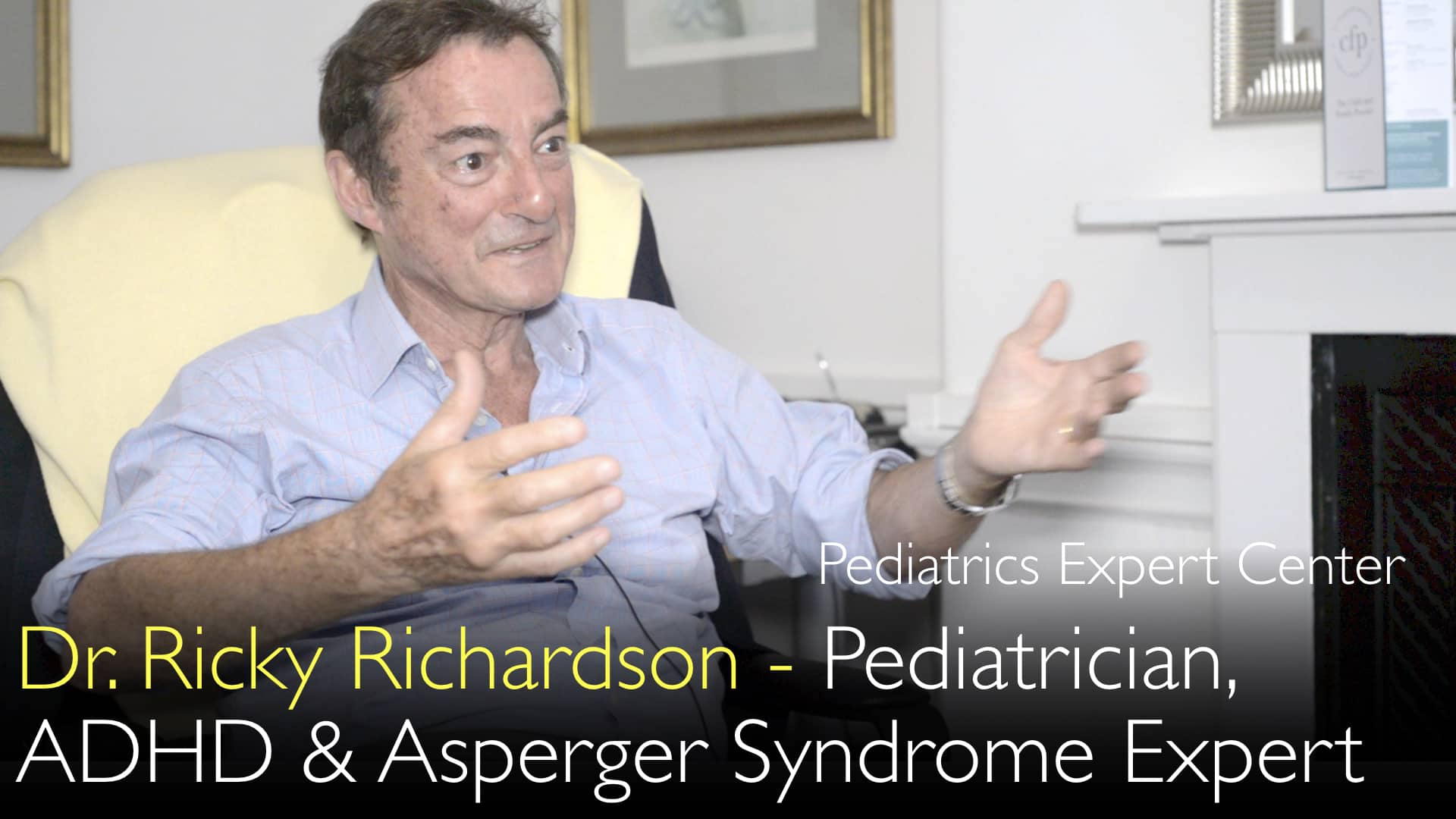
Leading expert in autism spectrum disorder, Dr. Ricky Richardson, MD, explains the robust multidisciplinary assessment process for children. He details the essential components of a diagnostic evaluation, including clinical examination, the ADOS test, and psychometric profiling. Dr. Ricky Richardson, MD, emphasizes the gravity of an ASD diagnosis, which is lifelong and impacts education and lifestyle. His team's structured methodology ensures diagnostic certainty before applying the autism label to a child.
Comprehensive Autism Spectrum Disorder Evaluation and Diagnostic Process
Jump To Section
- Multidisciplinary Assessment Importance
- Autism Diagnostic Criteria Certainty
- Clinical Evaluation Process
- ADOS Observation Schedule
- Psychometric Cognitive Testing
- School Visit Observation
- Full Transcript
Multidisciplinary Assessment Importance
Dr. Ricky Richardson, MD, underscores that a multidisciplinary assessment is essential for evaluating a child with suspected autism spectrum disorder. This approach is vital because ASD is a complex syndrome with varying severity and distinct symptom characteristics. Parents often seek evaluation when they notice their child is different, underperforming in school, or behaving oddly.
The goal is to provide a comprehensive understanding of the child's challenges. Dr. Ricky Richardson, MD, explains that this process captures the multifaceted nature of autism, ensuring no aspect of the child's development is overlooked.
Autism Diagnostic Criteria Certainty
Dr. Ricky Richardson, MD, stresses the importance of absolute certainty before giving a child an autism diagnosis. He notes that autism spectrum disorder is a lifetime diagnosis with enormous impact on schooling, education, and future lifestyle. His team does not like to apply diagnostic labels lightly.
They must be sure the child fulfills all autism diagnostic criteria on full testing. Dr. Ricky Richardson, MD, states that ASD is not a condition that simply gets better after six months. This gravity necessitates a robust and consistent evaluation methodology.
Clinical Evaluation Process
The first step in the autism evaluation is a clinical assessment by a senior specialist. Dr. Richardson mentions that this is conducted by a neurodevelopmental pediatrician or a psychiatrist, such as himself or Professor David Skuse. This initial evaluation is a critical part of the diagnostic journey.
It helps to frame the child's presentation within a clinical context. Dr. Anton Titov, MD, facilitates this discussion, highlighting Dr. Ricky Richardson, MD's detailed approach to understanding each child's unique profile.
ADOS Observation Schedule
A cornerstone of the autism assessment is the Autism Diagnostic Observation Schedule, or ADOS. Dr. Ricky Richardson, MD, describes this as a structured series of activities that are videotaped for review. This allows the team to meticulously analyze the child's responses to various questions and social prompts.
The ADOS test provides invaluable objective data on social and communication behaviors. This evidence is crucial for building a case to meet formal autism diagnostic criteria.
Psychometric Cognitive Testing
Dr. Ricky Richardson, MD, explains that a psychometric profile, or cognitive skills testing, is another key component. This assessment helps to understand the child's intellectual abilities and learning style. It identifies strengths and weaknesses that are common in autism spectrum disorder.
This cognitive profile is integrated with other evaluation data. The combination provides a holistic view of the child’s neurodevelopmental status, which is essential for accurate diagnosis and future planning.
School Visit Observation
If any diagnostic doubt remains, Dr. Richardson's team conducts a school visit. Observing the child in their educational environment offers critical real-world insights. This step is part of their commitment to a thorough and multidisciplinary assessment.
Dr. Ricky Richardson, MD, notes that seeing how a child functions at school can be revealing. All information from the clinic, testing, and school is then synthesized to reach a firm, evidence-based conclusion on an autism diagnosis.
Full Transcript
Dr. Anton Titov, MD: Autism spectrum disorder is an umbrella term for children. ASD has different severity. Autism also has distinct symptom characteristics. That is why autism spectrum disorder is a syndrome, as its name implies.
Dr. Anton Titov, MD: What are key trends in the evaluation and treatment of children with autistic spectrum disorder?
Dr. Ricky Richardson, MD: That is a very good question. We have learned a lot in terms of the assessment process. A multidisciplinary assessment is essential for children who are thought to be different.
We get many families who feel that their child is different or underperforming in school. The child could be behaving in a rather odd way. Parents want to know whether their child is autistic or not.
It is every parent's nightmare to have an autistic child. The child is very often unable to have any kind of social relationship, even with the parents. So we do a structured assessment of autistic spectrum disorder.
This autism evaluation method has evolved over many years. It is a robust methodology because it gives consistent results. We don't like to give children a diagnostic label like autism.
We must be absolutely certain that they fulfill autism diagnostic criteria on full testing. Because it is a lifetime diagnosis. Autism spectrum disorder is not just a diagnosis that gets better after six months.
It is a lifetime diagnosis. This has enormous impact on schooling, education, and future lifestyle. We have a special social and communication disorder clinic.
The process of assessment is important because it captures the multidisciplinary aspect of autism spectrum disorder. First, the child has a clinical evaluation by one of our senior neurodevelopmental pediatricians or psychiatrists, myself, for example, or Professor David Skuse.
Secondly, they do ADOS, the Autism Diagnostic Observation Schedule. This is a structured series of activities. We videotape all evaluations so that we can review the child's response to the various questions and activities.
Then there is a 3-D interview. This is a detailed computer-based interview with many algorithms built into the program. This interview gives the child a score in various key areas.
Finally, there is a psychometric profile, a cognitive skills profile. All of those diagnostic tests are done. Then we have a school visit if there is any doubt about the diagnosis.
We would like to see children at school. All of those processes are then brought together into a single point of assessment. Our goal is to offer a firm diagnosis based on the evidence we have established, or not.
We are quite good at identifying children who are autistic because we have been seeing autistic children for such a long time. It is rare and unusual for us to overturn a previous diagnosis, for example.
We carefully evaluate the child when the child is accepted for referral to the clinic.
Dr. Anton Titov, MD: What are the distinctive diagnostic criteria for Asperger syndrome? It is a controversial topic.